
Posted on 3rd Sep 2026
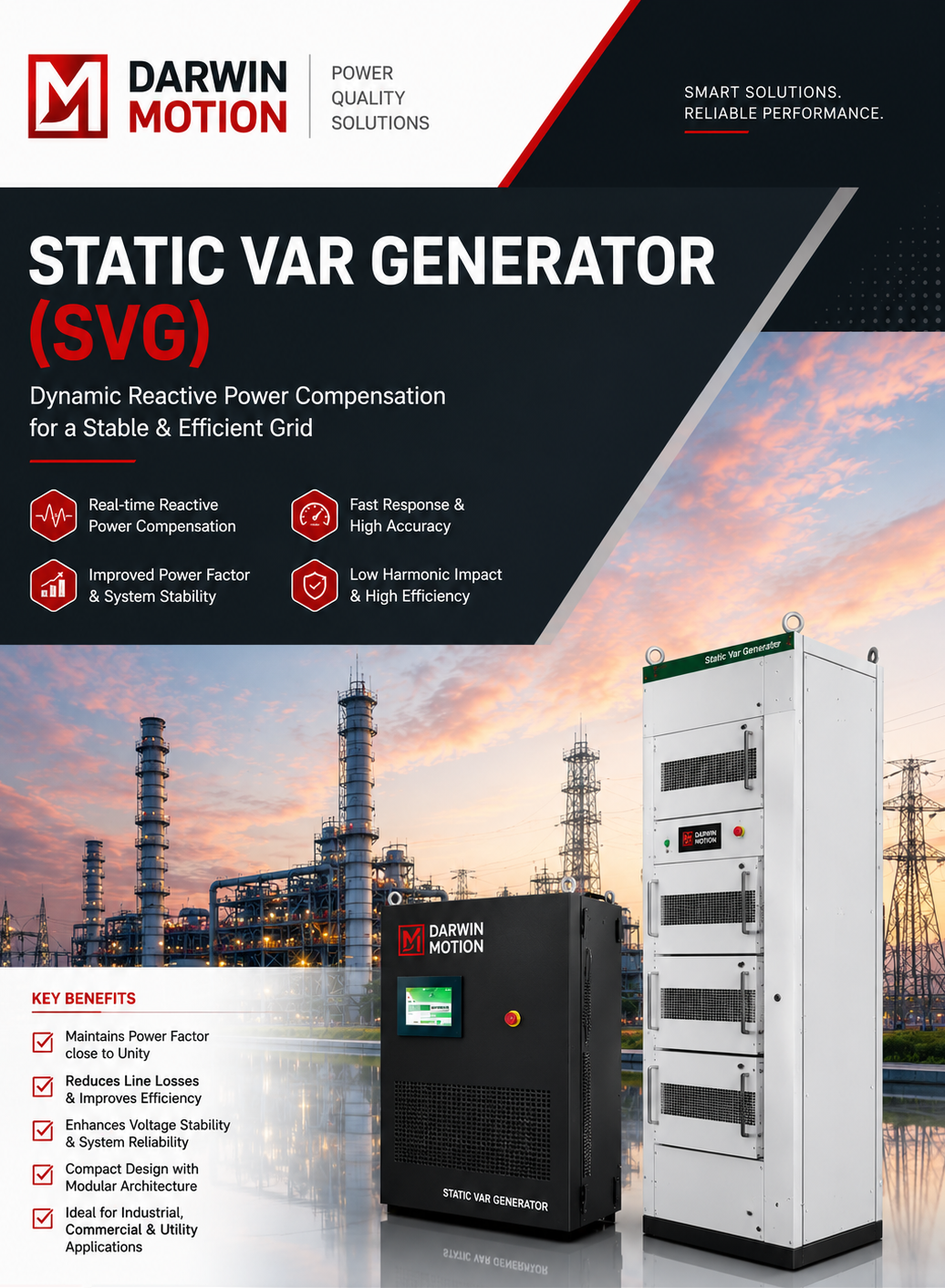
In modern industrial facilities, sudden load spikes, highly variable machinery, and non-linear electrical equipment severely strain power networks. Maintaining a target power factor close to unity (1.0) is essential to eliminate utility penalty surcharges, prevent voltage dips, and maximize overall distribution capacity. While legacy solutions like switched capacitor banks were once standard, heavy industrial facilities increasingly turn to active power electronic solutions. Determining the exact Static VAR Generator Price requires evaluating key operational variables including capacity ratings, cabinet architecture, dynamic response speeds, and system integration needs.
A Static VAR Generator (also known as an active power factor compensator or STATCOM) is an advanced power electronics device that provides continuous, stepless reactive power compensation. Using high-speed Insulated Gate Bipolar Transistor (IGBT) switches, an SVG dynamically injects or absorbs reactive current in real time to counteract lagging or leading power factor conditions.
Rather than looking purely at unit purchase costs, engineering teams evaluate total cost factors based on network demands and installation complexity:
The total reactive power compensation required (measured in kVAR) is the single largest price variable. Modern SVG architectures feature modular units ranging from 30 kVAR to 150 kVAR per module. Modular setups allow industrial plants to scale capacity seamlessly, minimizing upfront capital investment while allowing room for expansion.
Standard low-voltage units (380V to 480V) offer cost-effective modularity. High-voltage or specialized industrial environments requiring custom NEMA / IP-rated enclosures, forced cooling, or heavy-duty sheet-metal housing increase overall unit configuration costs.
Beyond dynamic power factor correction, high-tier Static VAR Generators offer secondary functionalities. Models capable of simultaneously correcting 3-phase load imbalance and filtering 2nd to 25th order current harmonics carry a higher initial price point but reduce the need for separate active filters.
Advanced human-machine interfaces (HMI touchscreens), remote Modbus/CANbus communication modules, and real-time power analytics software influence final system package pricing.
Industrial machinery—such as heavy pumps, extruders, crushers, and conveyers—relies heavily on variable frequency drives for motor control. As a distinguished industrial AC Drive manufacturer, Darwin Motion produces high-performance AC Drives engineered for demanding variable-speed applications.
While motor drives optimize mechanical output, operating multiple high-power AC Drives across a facility creates rapid reactive load fluctuations during motor acceleration and speed changes. Integrating a static VAR generator alongside Darwin Motion AC Drives delivers essential operational benefits:
Evaluating the baseline Static VAR Generator Price against direct savings reveals an exceptionally rapid Return on Investment (ROI):
In typical industrial plants running dynamic motor loads, the combined operational savings generally pay back the initial SVG purchase price within 12 to 18 months.
Understanding the true Static VAR Generator Price requires looking beyond capital expenditure to consider overall efficiency, power stability, and equipment protection. When paired with high-performance Darwin Motion AC Drives, installing a Static VAR Generator delivers precise reactive power compensation, lowers energy overhead, and guarantees peak electrical network performance.